The Reserve Bank has lifted the cash rate by another 0.25%, the fourth rise in this cycle, taking it to 4.60%. Here’s what that means for borrowers, where rates look to be heading, and why the refinance market is quietly one of the most competitive we’ve seen in a while.
1. What the latest rise means for repayments
For a typical principal and interest loan, the most recent 0.25% rise adds roughly $97 to $243 a month, depending on loan size. Across all four hikes, the total increase is now between $381 and $953 a month.
| Loan size at start of hikes | Latest rise | Across 4 hikes |
|---|---|---|
| $600,000 | +$97/mth | +$381/mth |
| $800,000 | +$129/mth | +$508/mth |
| $1 million | +$162/mth | +$635/mth |
| $1.5 million | +$243/mth | +$953/mth |
Indicative monthly principal and interest repayments, assuming the full rise is passed on by the lender.
2. Fixed rates: certainty at a price
The Big 4 have recently lifted their fixed rates by between 0.25% and 0.5%. Fixed rates now start from around 6.4% for owner-occupiers and 6.5% for investors.
Pros
- Repayment certainty
- Protection from further rate rises
Cons
- Unlikely to “beat the market”
- Break fees if you exit early
- No offset and limited extra repayments
A watch-out for buyers with pre-approval. Being pre-approved at a certain fixed rate doesn’t guarantee that’s the rate you’ll get at settlement. Unless the rate is locked, it can change between approval and settlement.
A rate lock guarantees the rate you applied for. It typically costs around $350 to $1,000, or 0.1% to 0.2% of the loan amount, depending on the lender. For buyers on a longer settlement, it’s worth a conversation.
3. A competitive refinance market
New lending is tight, so banks are competing hard for refinance customers. Some of the sharper rates we’re seeing:
- Owner-occupier, principal & interest: 6.19% (under 5.94% before the latest rise)
- Investor, principal & interest: 6.34% (under 6.09% before the latest rise)
If a client hasn’t reviewed their loan in the last 12 to 18 months, there’s a good chance they’re paying more than they need to.
4. Keeping downturns in perspective
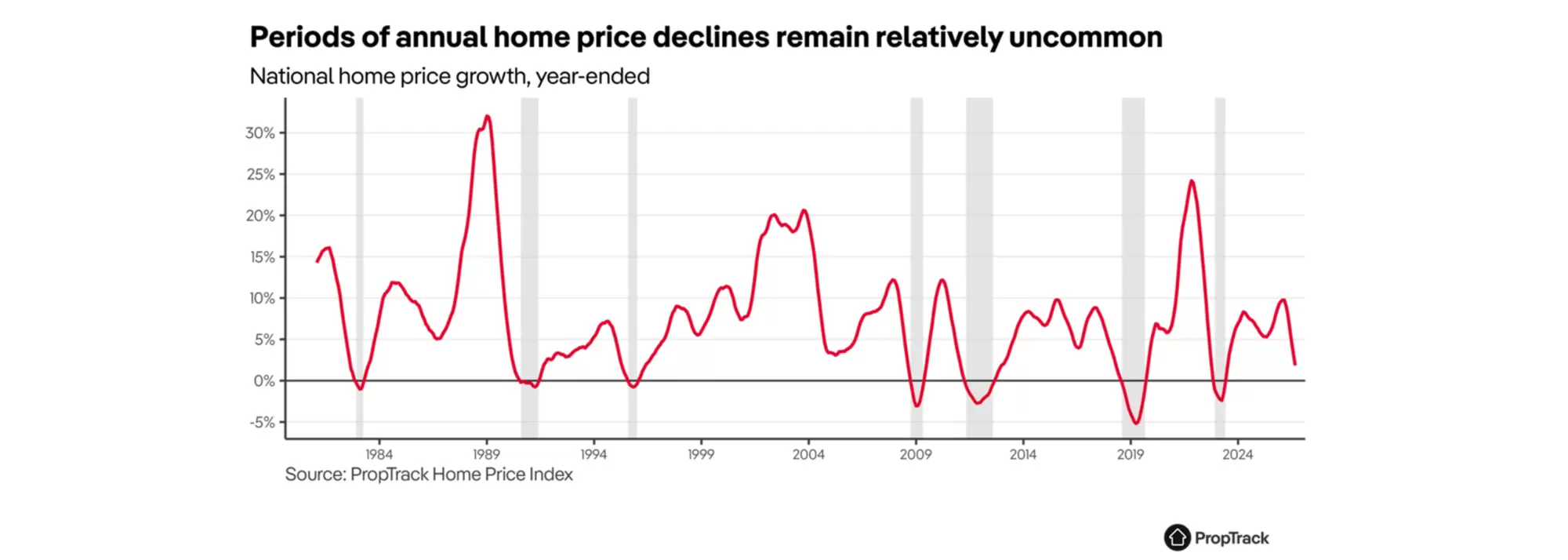
With price growth easing, it’s natural for buyers and sellers to ask whether a downturn is coming. History is reassuring. Over more than 40 years of data, national home prices have rarely fallen year-on-year, those falls didn’t last long, and each one was followed by a recovery.
(graph above)
Source: PropTrack Home Price Index.
Rates and figures are current as at 7 October 2026. They are indicative only and subject to change and lender criteria. Repayment figures are estimates. This article is general information only and does not take into account your objectives, financial situation or needs. Please seek advice before acting. Brown Brothers Mortgages Pty Ltd ABN: 34 653 389 318. Credit Representative #554374 is authorised under Australian Credit Licence #384704.